
Why do Recruiters Miss Out on Top Quality Candidates in 2026? | Resources
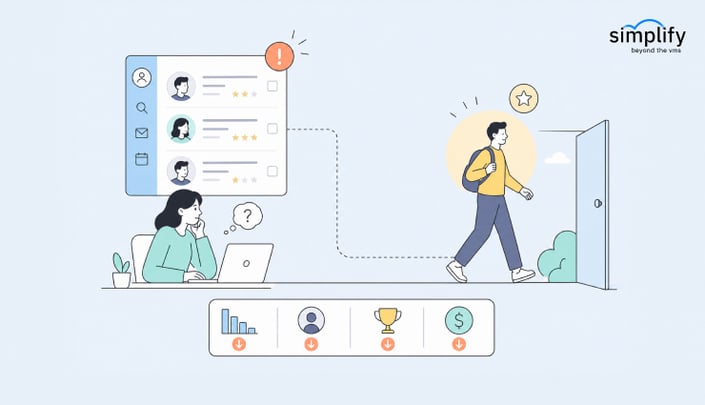
Recruiters are under constant pressure to fill positions faster, reduce hiring costs, and deliver quality talent. Yet despite their expertise, top candidates are often overlooked.
The problem isn't a lack of effort or availability of top-notch candidates. It's that traditional recruiting methods were built for a hiring landscape that no longer exists.
Today, HRs face overwhelming application volumes, evolving job requirements, and increasing competition for talent. In this environment, finding the best candidate isn't always about reviewing more resumes; it's about reviewing the right ones.
In today’s post, we will decipher why do recruiters miss top candidates, and how can modern technology help solve the problem?
Let’s get started by identifying the common problem in talent acquisition process that hampers quality of talent.
#1 Keywords Don't Tell the Full Story
Most recruiting systems still rely heavily on keyword matching.
While keywords can help narrow large applicant pools, they often fail to identify candidates with relevant experience expressed in different ways.
For example, a candidate may have led digital transformation initiatives but not use the exact terminology listed in the job description. Another may have highly transferable skills from a related industry that never appear in a keyword search.
As a result, qualified candidates can be filtered out before recruiters ever have the chance to evaluate them.
#2 Resume Volumes Continue to Rise
A single position can attract hundreds of applications.
Recruiters balancing multiple open requisitions simply don't have the time to manually analyze every resume in detail. Inevitably, some candidates receive only a brief review, while others may never be reviewed at all.
The challenge isn't finding candidates.
It's finding the right candidates quickly.
#3 Context Matters More Than Skills Alone
Two candidates may list identical skills but deliver very different values.
Consider a project manager with experience leading global ERP implementations versus one who has managed small internal projects. While both may possess the same certifications and technical skills, their relevance to a specific role can differ dramatically.
Traditional screening tools struggle to understand this context.
This is where many high-potential candidates are missed.
#4 Recruiters Need More Than a Resume
Resumes provide a snapshot of experience, but they rarely capture the complete picture.
Recruiters must also assess:
- Industry expertise
- Related experience
- Communication skills
- Availability
- Location preferences
- Compensation expectations
- Cultural alignment
Gathering and evaluating this information manually is time-consuming and often inconsistent.
5. Valuable Candidates Already Exist in Your Talent Pool
Many organizations spend heavily on sourcing while overlooking one of their most valuable assets, their existing candidate database.
Past applicants, silver-medalist candidates, and previously engaged talent often represent excellent opportunities.
However, manually searching thousands of historical profiles is nearly impossible.
As a result, recruiters frequently start from scratch even when qualified candidates already exist within their system.
What is the Impact of Missing Top Talent?
In circumstances where strong candidates are overlooked, organizations experience:
- Longer hiring cycles
- Increased recruitment costs
- Lower hiring quality
- Reduced recruiter productivity
- Greater dependence on external sourcing channels
In modern-day competitive talent markets, these challenges can directly impact business growth and project delivery.
How is AI Transforming Candidate Discovery?
Artificial intelligence is helping recruiters move beyond basic keyword searches and manual screening processes.
Modern AI-powered recruitment platforms can analyze candidate profiles more intelligently by evaluating both explicit qualifications and contextual experience.
Instead of asking, "Does this resume contain the right keywords?"
AI can help answer:
"How relevant is this candidate to the actual role?"
Finding Talent Beyond Keywords
Advanced candidate matching engines can evaluate:
- Skills and competencies
- Relevant industry experience
- Role progression
- Domain expertise
- Skills, education, and certifications
These allow recruiters to uncover strong candidates who may have been missed through traditional searches. At the end of the day, the quality of talent is one of the biggest competitive advantages.
Turning Candidate Data into Actionable Insights
AI in talent acquisition is no longer a buzzword; it is a reality.
AI-powered talent acquisition platforms such as SimplifyVMS help recruiters move beyond resume reviews by providing explainable candidate intelligence.
For example, recruiters can instantly see:
Match Scores
AI-generated candidate matching scores help prioritize candidates based on overall fit rather than keyword frequency. You can customize and prioritize scoring based on several factors such as experience, skills, certifications, and a lot more.
Related Experience Analysis
Candidates may not have identical backgrounds, but they often possess highly relevant adjacent experience.
Related Experience analysis highlights contextual alignment that traditional systems frequently overlook.
Explainable Recommendations
Instead of delivering a "black-box" result, recruiters receive clear explanations showing why a candidate was recommended, including supporting evidence from the resume and job description.
This helps recruiters make faster and more confident decisions.
AI-Powered Candidate Engagement
AI chatbots in recruitment can conduct preliminary candidate interactions through voice or text, collecting information such as:
- Availability
- Work authorization
- Relocation preferences
- Compensation expectations
The information is automatically added to the candidate profile, giving recruiters richer insights before the first conversation.
AI Doesn't Replace Recruiters: It Makes Them Better
Recruiting remains a people-driven profession.
Technology cannot replace relationship building, interviewing, negotiation, or human judgment.
What AI can do is eliminate repetitive administrative work and surface talent that might otherwise remain hidden.
By automating screening, matching, and candidate discovery, recruiters can spend more time engaging candidates and less time searching for them.
Final Thoughts
The best candidates are not always the ones who check every keyword box.
They are often the candidates whose experience, potential, and contextual fit align most closely with business needs.
Unfortunately, traditional recruiting methods frequently overlook these individuals.
Organizations that embrace AI-powered talent matching, explainable candidate scoring, and intelligent candidate engagement gain a significant advantage. They identify stronger talent faster, improve recruiter productivity, and make more informed hiring decisions.
In a market where top talent moves quickly, the ability to uncover hidden candidates isn't just helpful, it's becoming a competitive necessity.
That’s all for today!
We hope you found this article valuable. Here are some of our most popular resources you might enjoy:

SimplifyVMS is an AI-native vendor management platform focused on contingent workforce, services procurement, automation, compliance, and analytics. Its content covers VMS strategy, SOW management, AI, integrations, and emerging trends, helping enterprise leaders make informed technology decisions and address complex workforce challenges. It shares practical insights to simplify workforce operations and improve visibility.



Your comments