
What It Takes to Win Your CTO Over on a VMS? | Resources
For years, Vendor Management Systems (VMS) have been largely viewed as procurement tools.
More like, platforms focused on managing staffing suppliers, controlling spend, and streamlining contingent workforce operations.
That perception is rapidly changing.
Today, workforce complexity has expanded far beyond traditional procurement workflows.
Enterprises now manage a blended workforce made up of permanent employees, contingent workers, freelancers, SOW-based talent, and outsourced teams across multiple regions and systems.
As a result, organizations are struggling with fragmented workforce technology stacks that create silos, limit visibility, and slow decision-making.
This shift is pushing VMS into an entirely new role: a strategic enterprise platform.
In today’s article, we will discuss the strategic VMS shift and what you need to do to shift your organization to today’s comprehensive vendor management technology model.
Let’s start by understanding real-world workforce technology problems that businesses experience in day-to-day proceedings.
What Workforce Technology Problem Enterprises Are Facing Today?
Most large organizations operate with disconnected systems across HR, procurement, finance, and workforce operations.
As a result, one platform manages employees, other tracks contractors, another handles invoicing, while analytics and reporting often sit elsewhere.
The result?
- Inconsistent workforce data
- Limited visibility across talent categories
- Delayed reporting and forecasting
- Higher operational costs
- Poor workforce planning accuracy
- Complex compliance and governance challenges
When workforce data is fragmented, leadership teams struggle to answer even basic questions such as:
- What is the total workforce spend globally?
- Where are contractors being overutilized?
- Which regions have the highest supplier dependency?
- How quickly can talent gaps be identified and filled?
- Are workforce strategies aligned with business growth plans?
This is why enterprises are increasingly moving toward unified workforce ecosystems such as vendor management systems to manage multiple aspects of workforce operations.
Is VMS Becoming the Orchestration Layer?
Modern VMS platforms are no longer operating in isolation.
Instead, they are evolving into orchestration layers that connect HR systems, procurement platforms, finance applications, ATS solutions, and workforce analytics into a single ecosystem.
In simple words, modern vendor management systems offer a unified suite that gives you an overall visibility of all essential metrics associated with contingent workforce management.
A modern VMS can now centralize:
- Contingent workforce management
- Supplier management
- Direct sourcing
- SOW engagement tracking
- Workforce analytics
- Time and expense management
- Compliance workflows
- AI-driven talent matching
- Cost forecasting and reporting
- Shift scheduling and management
By integrating these core functions, organizations gain a unified source of workforce intelligence across the enterprise.
This shift is fundamentally changing how VMS platforms are evaluated internally.
As a result, the industry is seeing rapid adoption of vendor management technology across diverse business genres such as Hospitality, Tech, Finance, Retail, Infra, Manufacturing, Logistics, Healthcare, Business Services, and more.
Why are CTOs and CIOs Now Involved in VMS Decisions?
Historically, VMS buying decisions were often led by procurement or HR teams.
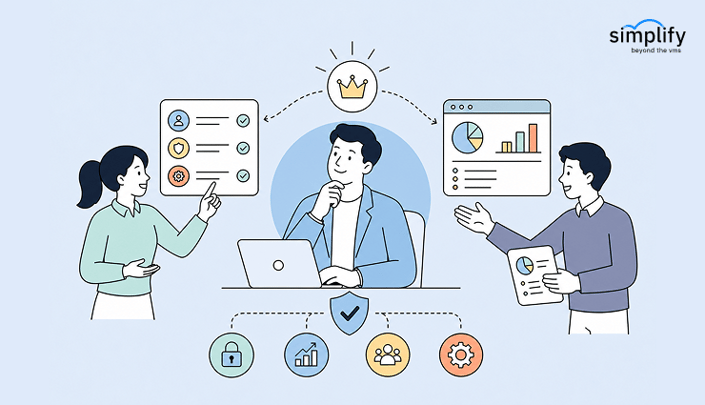
Today, CTOs and CIOs are increasingly involved because workforce platforms now directly impact:
- Enterprise architecture
- Data governance
- System interoperability
- AI readiness
- Scalability
- Cybersecurity
- Global compliance
- Real-time analytics capabilities
- Employee productivity and business output
In many organizations, workforce technology decisions are no longer just operational purchases; they have evolved into strategic infrastructure and business decisions.
An external workforce management platform that cannot integrate seamlessly with enterprise systems creates long-term technical debt.
On the other hand, a scalable and configurable platform can become a foundational layer for workforce transformation initiatives.
This is especially important as organizations adopt AI-driven workforce planning and predictive analytics.
Decoding the Rise of the Workforce Intelligence Layer
Modern enterprises are no longer satisfied with transactional workforce tools.
They want intelligence.
Today’s advanced VMS platforms are evolving into real-time workforce intelligence layers capable of delivering:
- Live workforce visibility
- Predictive hiring insights
- Spend optimization recommendations
- Supplier performance analytics
- AI-assisted decision-making
- Workforce risk monitoring
- Global benchmarking capabilities
- SOW comparison and benchmarking
- And a lot more...
This enables leadership teams to move from reactive workforce management to proactive workforce strategy.
Instead of simply processing requisitions, the VMS becomes a platform for enterprise-wide workforce planning and operational optimization.
The Convergence of HR and Technology Buying
One of the biggest trends driving this HR tech evolution is the convergence of HR and enterprise technology strategy.
Workforce decisions are increasingly tied to:
- Digital transformation initiatives
- Data standardization goals
- Enterprise automation strategies
- AI adoption roadmaps
- Cross-functional reporting requirements
As a result, HR, procurement, finance, and IT teams are collaborating more closely than ever during workforce platform evaluations.
This convergence is reshaping the VMS market itself.
Organizations are no longer asking:
“Can this platform manage staffing vendors?”
They are asking questions like:
“Can this platform support our long-term workforce architecture?”
Why are Vendor Management Systems No Longer Just About Procurement?
The modern workforce landscape demands more than isolated systems and transactional tools.
Organizations need connected platforms that deliver visibility, intelligence, scalability, and automation across every workforce category.
That is why VMS is evolving from a procurement-centric application into a strategic enterprise platform.
And increasingly, that makes it a CTO conversation, not just a procurement one.
For enterprises preparing for the future of workforce management, the question is no longer whether a VMS is necessary.
The real question is whether the platform is capable of supporting the enterprise workforce strategy of the next decade.
Final Thoughts
The role of VMS is undergoing a major transformation. What was once considered a procurement-focused tool is now becoming a critical part of enterprise workforce architecture. As organizations face growing pressure to unify workforce data, improve visibility, enable AI-driven decision-making, and scale globally, VMS platforms are stepping into a far more strategic role.
This shift is also changing who influences the buying decision. Today’s CTOs and CIOs are evaluating VMS platforms not just for operational efficiency, but for integration capability, scalability, data intelligence, security, and long-term technology alignment.
The modern enterprise no longer needs another disconnected workforce tool. It needs a platform that can orchestrate workforce operations across HR, procurement, finance, and technology ecosystems.
That is why the question is no longer whether a VMS can manage vendors. The real question is whether it can support the future of the enterprise workforce strategy.
That’s all for today, we hope this article answered your queries.
Here are some additional articles that you might find resourceful.
- AI vs HRs: What is the Future of Talent Acquisition?
- The Math Behind Calculating Your VMS Performance
- Expert Guide: The Best Vendor Management Practices You Should Follow Immediately

A content professional with 7+ years of experience focused on SaaS, AI, automation, digital transformation, and emerging technology trends. Passionate about reading and writing technology and SaaS-focused content that helps businesses understand complex technology, explore industry trends, and address real-world challenges. Particularly interested in how AI and technology are shaping the future of the contingent workforce industry.
Your comments